
Out of Sight, Out of Mind

January 17th, 2010 No comments

There may be times when not knowing something is better than knowing. However, that’s not the case when it applies to what’s going on in your crawl space. The “out of sight, out of mind” philosophy is a dangerous one to have. Why? There are a number of things that may inhabit the space, such as radon gas, toxic mold, airborne allergens and unwanted pests (after all, they don’t call it a crawl space for nothing).

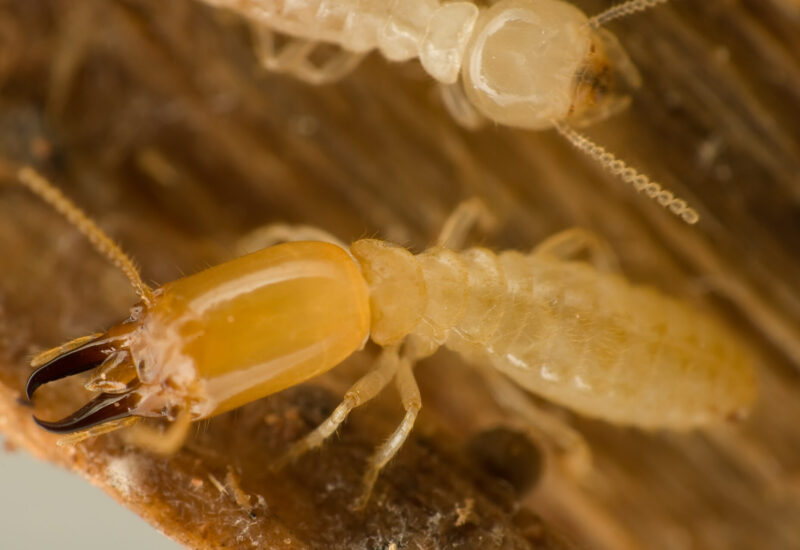
By nature, crawl spaces are damp with moisture levels exceeding 70% humidity during certain times of the year. This creates the perfect environment for toxic mold and wood rot as well as conditions conducive for wood destroying insects like termites and carpenter ants. The current standards of venting crawl spaces reveal a flaw in their approach. Studies have shown that ventilation systems contribute to the very condition they are supposed to address. Adding to the problem is the loss of heat and cool air, increasing your energy costs. So, what’s the solution?

Research data strongly recommends encapsulation of the crawl space. This process encompasses various stages that when applied correctly, will remove the environment that caused the unfavorable condition.

• Remove the moisture source
• Separate the home from the environment producing moisture, the earth itself
• Encapsulate the crawl space with 20 mil thick polyethylene
• Install a dehumidifier as well as a sump pump
• Seal all openings to create an air tight space

Research indicates the following advantages to using this method:

• Greatly improves the indoor air quality of your home
• Reduces radon gas, musty smells, moisture and mold
• Protects the home from rot, wood destroying insects and other pests
• Reduces allergens
• Reduces your energy costs by insulating your crawl space
• Provides you with additional storage space

Where does all of this leave us? It leaves us with the question, when was the last time I went into my crawl space? Remember, the worst thing you should allow yourself to develop is the “out of sight, out of mind” philosophy. It is better to address the problem now before it gets worse.

Categories: Weekly Newsletter

Home Sweet Home

January 10th, 2010 No comments

After a hard day at work or school, our home is the place of peace and security we long for. However, it may not be as safe as we think when we take into consideration the current methods of construction. As we focused on making our homes and businesses energy efficient (air tight), we trapped contaminates indoors, lowering the indoor air quality. We forgot the very simple fact that our homes need to breathe in order to maintain healthy indoor air. “Home sweet home” may not be as sweet as we thought.

Doctors, health agencies and scientific researchers have concluded that indoor air may be one of the worst causes of health related problems. Why? Indoor dust is more dangerous than outdoor dust because it contains bacteria, pollen, skin flakes, decaying organic matter, fungi, hair, dust mites and fibers as well as chemical residues. Added to the health risks associated with contaminated indoor air is the billions of dollars spent each year to treat the symptoms of polluted air. Contaminated air also soils wall coverings, carpets, upholstery and clothing.

The last thing you would have imagined was that your home would become harmful to your health. If every time you walk into your home or business you start to experience headaches, weariness, nausea, malaise, sneezing, wheezing and rashes, it may be an indicator that it is making you sick. At this point you may be wondering if anything can be done to address this matter. The solution lies in the following questions. When was the last time you had your air handling system decontaminated? When was the last time you changed the filters? If you are having some difficulty providing these answers, it’s time you hired Catseye.

Catseye Pest Control is excited to announce a new service: Indoor Air Control, including air duct cleaning, odor control and fresh air filtration systems. What would such a procedure encompass? The air handler unit is thoroughly cleaned, deodorized and sanitized. Every vent register/diffuser will be removed, cleaned and reinstalled. Your entire duct system will be thoroughly cleaned, duct sealant applied, deodorized and sanitized. Once you have had your system decontaminated, you will notice that it is running more efficiently (saving on your energy cost), your furnishings are staying cleaner longer and you’re breathing fresh, healthy indoor air. It’s at this point that you will be able to say with confidence, “home sweet home”.

Categories: Weekly Newsletter

Catseye Cares For Kids

January 1st, 2010 No comments

Catseye Cares for Kids

Categories: Public Relations

Not Me

December 20th, 2009 No comments

They enjoy our company, food, drink, homes and businesses. For centuries their existence has been largely dependent on our hospitality (sort of). Their population is closely related to the human population. Keep in mind that people have to eat and there lies the paradox. We generate tons of food related trash (someone’s trash is another’s treasure) and that is the case with rodents, like mice and rats. Understanding our connection (commensal relationship) to them will assist us in answering the question “why me”?

Industry renowned rodentologist Dr. Bobby Corrigan has studied the current issues related to the increase of rodent populations in various metropolitan areas, providing us with hands on insight in addressing the matter. His years of studying their behavior and biology as well as his knowledge of the advances in rodent management have made him the go-to guru on rodents. So when he speaks, we need to listen intently. The following facts stress the need to do so.

• Rodents reproduce quickly
• The House Mouse may have up to 5 litters per year with as many as 5-10 young per litter
• The Norway Rat may average 4-6 litters with 6-12 young per litter

You can see that if the environmental conditions are right, instant population explosion will occur as well as the health risks associated with it.

The key to any rodent management program consists of pest identification, sanitation, harborage elimination and pest proofing. The success of the program will largely depend on whether each of the key elements mentioned are addressed.

Interestingly, creating an environment that is unwelcoming will assist in the management of the population by natural means. The stress caused by increased competition for food and territory will result in mortality to many within the colony. This therefore reinforces the importance of applying the key elements of our rodent program.

• Eviction by performing approximately 5 days of consecutive trapping
• Cleanup as well as sanitize and disinfect areas contaminated by rodent activity
• Seal the entry points using the CAT-GUARD EXCLUSION SYSTEM

To ensure their elimination, regular monitoring is performed, making it the most extensive rodent program in the industry.

This fact remains true: the most effective program is the one that prevents the problem from developing. By taking a proactive approach rather than a reactive one you will be able to answer the question “why me?” with, not me.

Categories: Weekly Newsletter

When To Walk Away

November 29th, 2009 No comments

It has been said that “discretion is the better part of valor” and this is especially true in pest management. There are times when the only way to assist someone that believes they have a pest issue is to know when to walk away. That may seem strange to you, after all isn’t that why we are in business? There lies the irony; most individuals would assume that stating they have a pest issue is enough to have treatment performed. However, the reality is that unless a pest has in fact been identified, any treatment would be a violation of the law.

One of the most difficult situations to handle as a pest management professional has always been the client that has convinced himself or herself that they have biting insects throughout their home. Some may, at this point, think that would be the easiest sale to make, but it is not so. A true professional will want to be sure that there is evidence to proceed with the service for a number of reasons (legality being the least concern). Usually, you would be able to tell if the individual is an “acarophobic” (may have phobias of chemicals and rodents as well). When you detect that is the case, the kind thing to do is walk away when they insist on treatment rather than allowing you to monitor the situation first. Sadly, once someone has convinced themselves that they are being attacked by some mystery pest you will never be able to reason with them even when the evidence proves otherwise.

The recent accounts that have been sensationalized in the media of the resurgence of bed bugs are a case in point. Why do I say that? Because every itch that occurs in the mind of the “phobic” is a result of a bed bug and nothing you say or evidence you provide to the contrary will change their mind. Don’t misconstrue my statement as lack of sympathy for those that suffer from these types of “phobias”. It’s for that very reason that I state, know “when to walk away”. It’s a kindness to do so rather than re-enforcing their phobias.

Categories: Weekly Newsletter

The Future Does Not Look Good

November 22nd, 2009 No comments

This past week I attended the Pest Expo in New York City; its focus was the current resurgence of bed bugs. The main speakers, Dr. Michael F. Potter, Professor of Entomology at the University of Kentucky and Dr. Dini M. Miller, Ph.D, Associate Professor in the Department of Entomology at Virginia Tech., are leading experts in the field of bed bugs and both stress this simple fact, the future does not look good. Why? There is nothing on the horizon that addresses the need for an effective residual material assisting in the elimination of bed bugs. Their research therefore stressed the importance of educating ourselves and our clients on the need of vigilance if control is to be achieved.

Dr. Potter stated that bed bugs have become the six legged mold (health concern of today). Both Dr. Potter and Dr. Miller expressed that what continues to contribute to the resurgence of this blood sucking pest is the negative stigma that individuals associate with it. Incidentally, another contributing factor to the difficulty in dealing with this problem is the attitude many have today of instant gratification. The idea that as a client, they play an important role in the elimination process is unthinkable (after all, this is what they are paying us for). This is why education is an important facet of any bed bug elimination program (we provide a seminar as part of our program); it stresses the partnership that must exist if the program is to be effective.

A recurring theme during the Expo was “amateur treatments produce amateur results”. Not to mention the misapplication of insecticides (as seen in the case of an individual setting off 30 total release foggers in his apartment, where each fogger treats an area of 100 sq ft). I’m sure that you have heard it said that “God protects children and fools” this case is proof He does. This individual very easily could have blown up his apartment and those adjacent to his. As a pest management professional, I recommend the documentation of any previous treatments performed by the homeowner as well as taking photographs of the current conditions. Hence, as I stated in an earlier Newsletter, this is one of those occasions better left for a trained professional to handle.

Though the use of extreme heat and fumigation have been proven to be effective (costs are prohibitive), it can only guarantee that you are bed bug free for just one day. Which is why, the future does not look good. Stay tuned as we continue to monitor this story.

Categories: Weekly Newsletter

Not Your Average Infestation

November 15th, 2009 No comments

Over the past 30 years I’ve witnessed many strange and unusual events during my pest control career. Let me tell you one story that is sure to knock your socks off. Early in my career, I had the pleasure of treating one of the oldest insects, dating back over 200 million years. These creatures have wings, six legs, two antennae and like to eat sweet and floury foods. They live in dark, wet places and are the most common household pest. What are they? German cockroaches.

One morning, around 2:30am, police were responding to a complaint of a barking dog in Schenectady, New York. When they arrived, they were literally ankle deep in what came to be known as the largest infestation of German cockroaches in the country. The cockroaches had spilled out into the street, up into the trees and in surrounding neighbor’s yards. We were called in immediately by the Board of Health to remedy the infestation. As soon as we opened the door to the home, cockroaches came raining down from the ceiling, spilling out onto our feet. The house was completely saturated. There were cockroaches living in every square inch of the home. A 64 year old woman, two dozen dogs, over a dozen cats, two mice and a parrot were all found inside, all badly bitten by cockroaches and fleas.

We had to treat the three block radius surrounding the infested house, including all neighboring homes, lawns, trees, sewer lines and even the police vehicles and ambulances that carried the woman and her pets out. Some of the pets were so badly harmed that they did not survive. The house was ordered destroyed and the residents were charged with cruelty to animals. As the building was being torn down over the next few days, we had to use power sprayers to kill and control the spread of the cockroaches. It was the most incredible thing I’ve ever witnessed. Definitely not your average infestation.

Categories: Weekly Newsletter

Absolutely Disgusting

November 8th, 2009 No comments

What comes to mind when I say Emergency Room? Perhaps hectic, noisy, chaotic, sterilized, but I’m sure you would never say insects. Let me simply say that hospitals have the same pest issues as any other facility. They might have rats, mice, cockroaches, ants or flies, just to mention a few. “Absolutely disgusting” you say. After you read this account you will never look at an ER the same way ever again.

I was asked to evaluate a gnat condition in a hospital ER. As I began my inspection of the ER, which included a number of the partitioned examining areas, I quickly recognized the gnats to be Phorid Flies. This insect does not fly far from its breeding site (usually a broken sewer line or some other source of decaying organic matter). Knowing this helped me to focus on those areas that are most likely to provide the prefect breeding site. The insect fly lights that were installed earlier as part of our regular pest management program also were of assistance in determining the heaviest concentration. One thing is clear in pest management; solutions never come easy, as this case proves. After hours of searching I was still not close to ascertaining their source. At this point I did what the doctors that work in the ER do when they come up against a troubling case, ask questions. Doing so led me to the most unlikely source; I found one thing in common in the areas with the heaviest concentrations.

You’re going to love this; the architect of the ER came up with the novel idea of a commode that would close up into the wall (flushing its contents once closed) providing additional space when it’s not in use. Sounds like a great idea, right? Not exactly. The staff informed me that though it may have been a great idea, in actual practice there were mechanical issues that caused them to discontinue their use. I asked one of the maintenance personnel to open them up so that I could examine them. This is the part you’re going to love; it appears no one informed one of the patients that the commode was no longer in use. So after he used it, he closed it up. That’s right, and for months no one was aware that its contents were fermenting in the wall until the flies appeared and I discovered their breeding site (by the way, when the right one was opened the smell cleared the area as you can well imagine). Once the site was discovered, treatment and elimination was rather easy. At this point, the staff made sure that they would never be used again by permanently sealing them.

So what do you think now? No doubt, “absolutely disgusting”.

Categories: Weekly Newsletter

Spooky

November 1st, 2009 No comments

As I reflect back to some of those interesting places pest management has taken me (some more interesting than others), the World Trade Center was one of them. We had been called in to treat the Center after the 1993 bombing. It was “Spooky” as our crew entered the vacated structure months after the initial investigation of the bombing had begun. Up to this point, the only individuals that were allowed into the structure had been investigators with various governmental agencies and construction workers assigned to the task of making repairs to the 98 foot wide hole (through four sublevels of concrete). Stepping up to that crater and looking down into it was extremely surreal when you realize what could have happened if they had placed the explosives in a different location.

But, why would they need pest management? What pest could possibly survive such an ordeal? As I have said previously in this Newsletter, they always find a way. What we would consider to be a hostile environment, cockroaches, flies, mice and rats just call it home. As we began our inspection we discovered that these adaptable critters were doing extremely well. In that rather short period of time, their numbers had increased dramatically. It was clear to us that we had our work cut out for us.

As the months rolled by it would be a year before we ultimately achieved control. Yet, during the entire process that “Spooky” eerie feeling never left anyone that worked at the WTC before it re-opened.

Categories: Weekly Newsletter

Not Bad

October 25th, 2009 No comments

As a child who enjoyed playing with insects in the back yard, who knew that today I would be making a living doing the very thing I did as a child. It’s been an interesting 30 years; from cockroach infested crawl spaces to yellow jackets at the top of the World Trade Center and everything in between.

It reminds me of the time a colleague and I were called to evaluate a problem in one of those interesting places you would never think of having a pest issue. My colleague had received a call from our maintenance division in Washington DC. He comes into my office to inform me that we would be flying out of LaGuardia Airport the next day (the details were rather sketchy). I was going because my colleague had recently been appointed VP of our pest management division and had zero pest management experience. We hop on the 9AM shuttle and arrive about 45 minutes later. As we disembark, we see our contact waiting with a vehicle to immediately drive us to the location, which had not yet been identified. We discussed what the issue was. They suspected they had a rat problem but had no idea how to determine if in fact that was the case, which is the reason I was flown to DC. He advises us that our FBI background checks were done and we were cleared. At this point I was thinking, “FBI background check for what?”

You are no doubt are wondering where he’s taking us as I was wondering the same thing. As we got closer to our destination he informed us that we were heading to Blair House. Blair House stands on Pennsylvania Avenue across from the White House. It’s the President’s guest house, hosting foreign heads of state visiting the United States on official business.

We go through the security check point and are escorted to the rear courtyard. As I begin my inspection I notice signs of rodent activity starting along the perimeter of the yard. The courtyard had decking over the ground that provided perfect harborage for them. Rodents had burrowed under the decking making it difficult to treat. I set up a protocol for them to address the problem and just as quick we were back on the shuttle to LaGuardia. Who knew that playing with insects would have taken me to the President’s guest house, “not bad”.

Categories: Weekly Newsletter